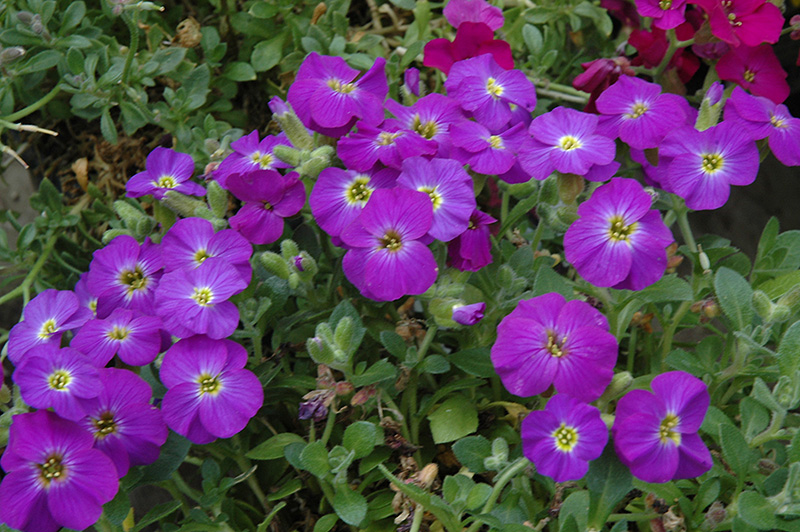
Aubieta, Rock Cress, Axcent Violet With Eye Aubrieta 'Axcent Violet With Eye' Plant Height: 4 inches Flower Height: 6 inches Spread: 12 inches
Sunlight:
Hardiness Zone: 4a Group/Class: Axcent Series Brand: Syngenta Description: This stunning alpine variety produces beautiful cascades of dainty violet flowers in springtime; for the rest of the season it is an attractive dense green mat adding tremendous interest to the rock garden or border edges Ornamental Features Aubieta, Rock Cress, Axcent Violet With Eye is smothered in stunning violet cup-shaped flowers with lavender overtones, yellow eyes and white centers at the ends of the stems from mid to late spring. Its small round leaves remain green in color throughout the year. Landscape Attributes Aubieta, Rock Cress, Axcent Violet With Eye is a dense herbaceous evergreen perennial with a ground-hugging habit of growth. Its relatively fine texture sets it apart from other garden plants with less refined foliage. This is a relatively low maintenance plant, and should only be pruned after flowering to avoid removing any of the current season's flowers. It is a good choice for attracting butterflies to your yard. It has no significant negative characteristics. Aubieta, Rock Cress, Axcent Violet With Eye is recommended for the following landscape applications; Planting & Growing Aubieta, Rock Cress, Axcent Violet With Eye will grow to be only 4 inches tall at maturity extending to 6 inches tall with the flowers, with a spread of 12 inches. Its foliage tends to remain low and dense right to the ground. It grows at a slow rate, and under ideal conditions can be expected to live for approximately 10 years. As an evegreen perennial, this plant will typically keep its form and foliage year-round. This plant does best in full sun to partial shade. It does best in average conditions that are neither too wet nor too dry. To help this plant achive its best flowering performance, periodically apply a flower-boosting fertilizer from early spring through into the active growing season. It is not particular as to soil type, but has a definite preference for alkaline soils. It is somewhat tolerant of urban pollution. This particular variety is an interspecific hybrid. It can be propagated by division; however, as a cultivated variety, be aware that it may be subject to certain restrictions or prohibitions on propagation.