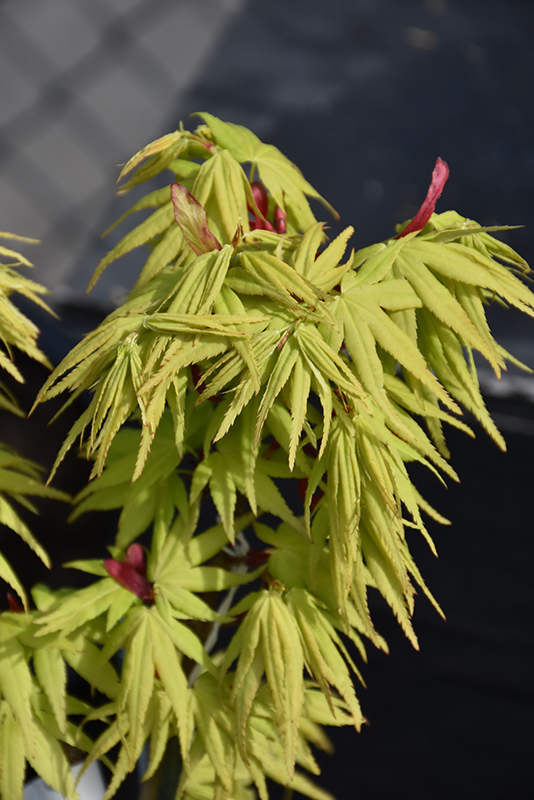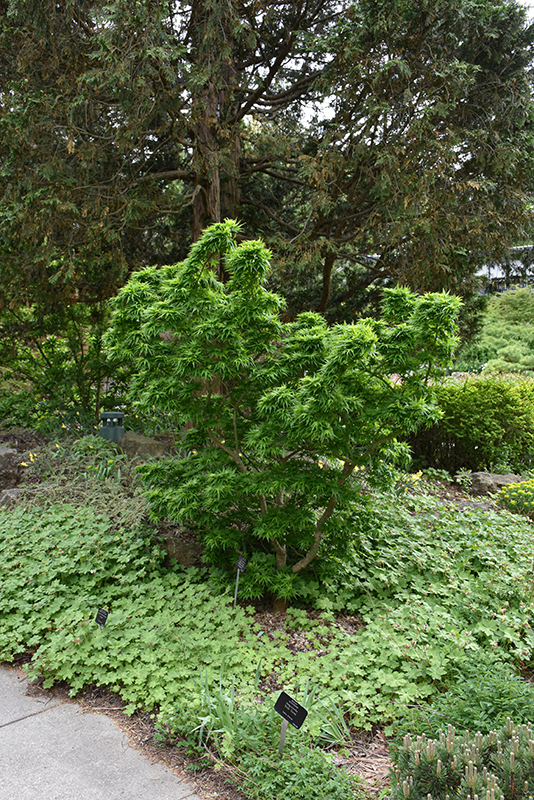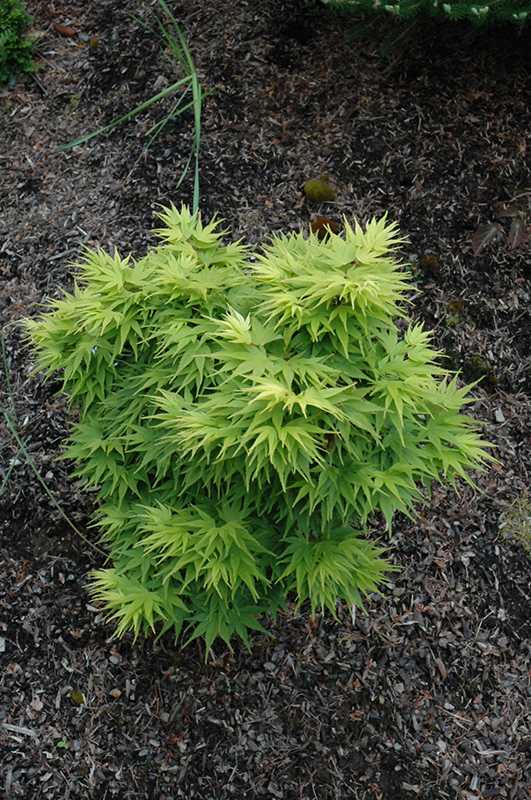
Japanese Maple, Mikawa Yatsubusa Acer palmatum 'Mikawa Yatsubusa' Height: 6 feet Spread: 8 feet
Sunlight:
Hardiness Zone: 5b Description: This is a lovely dwarf variety that adds visual interest to the garden or walkways; rich green foliage all summer long; striking orange to scarlet fall foliage is captivating and brilliant; best in sheltered area Ornamental Features Japanese Maple, Mikawa Yatsubusa is primarily valued in the landscape or garden for its ornamental upright and spreading habit of growth. It has attractive green deciduous foliage which emerges light green in spring. The small lobed palmate leaves are highly ornamental and turn outstanding shades of orange and in the fall. Landscape Attributes Japanese Maple, Mikawa Yatsubusa is a dense deciduous tree with a strong central leader and an upright spreading habit of growth. Its relatively fine texture sets it apart from other landscape plants with less refined foliage. This is a relatively low maintenance tree, and should only be pruned in summer after the leaves have fully developed, as it may 'bleed' sap if pruned in late winter or early spring. It has no significant negative characteristics. Japanese Maple, Mikawa Yatsubusa is recommended for the following landscape applications; Planting & Growing Japanese Maple, Mikawa Yatsubusa will grow to be about 6 feet tall at maturity, with a spread of 8 feet. It tends to be a little leggy, with a typical clearance of 2 feet from the ground, and is suitable for planting under power lines. It grows at a slow rate, and under ideal conditions can be expected to live for 60 years or more. This tree does best in partial shade to shade. It prefers to grow in average to moist conditions, and shouldn't be allowed to dry out. This plant should be periodically fertilized throughout the active growing season with a specially-formulated acidic fertilizer. It is not particular as to soil pH, but grows best in rich soils. It is somewhat tolerant of urban pollution, and will benefit from being planted in a relatively sheltered location. Consider applying a thick mulch around the root zone in winter to protect it in exposed locations or colder microclimates. This is a selected variety of a species not originally from North America. Japanese Maple, Mikawa Yatsubusa is a fine choice for the yard, but it is also a good selection for planting in outdoor pots and containers. With its upright habit of growth, it is best suited for use as a 'thriller' in the 'spiller-thriller-filler' container combination; plant it near the center of the pot, surrounded by smaller plants and those that spill over the edges. It is even sizeable enough that it can be grown alone in a suitable container. Note that when grown in a container, it may not perform exactly as indicated on the tag - this is to be expected. Also note that when growing plants in outdoor containers and baskets, they may require more frequent waterings than they would in the yard or garden.