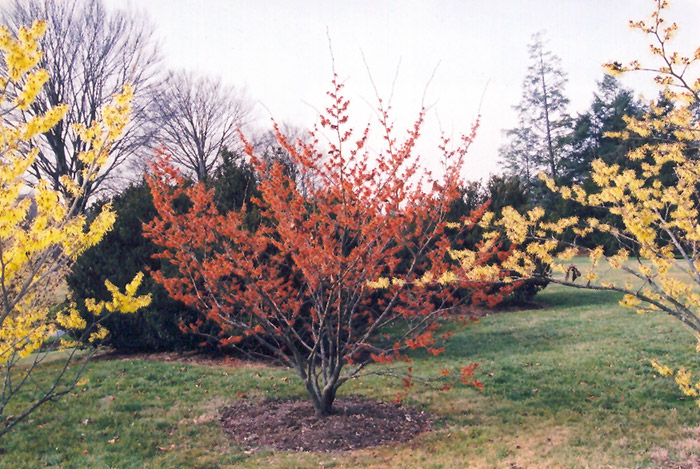
Witch Hazel, Diane Hamamelis x intermedia 'Diane' Height: 12 feet Spread: 12 feet
Sunlight:
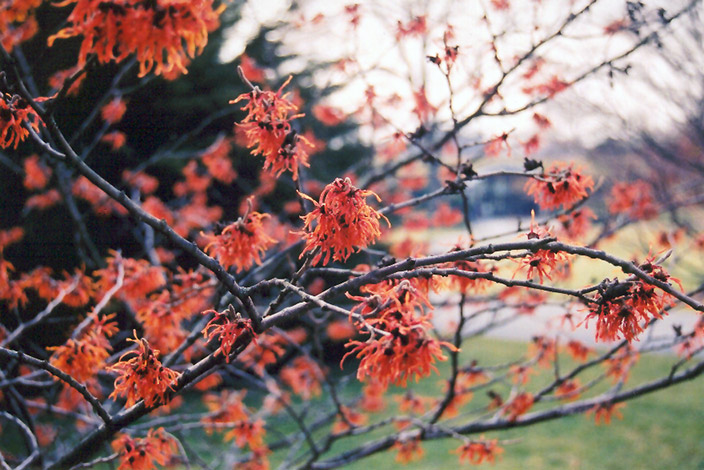
Hardiness Zone: 5b Other Names: Witch Hazel Description: A large, spreading shrub that brings color and fragrance to the late winter garden when most other plants are still dormant with its delightfully fragrant reddish-brown flowers which appear along the branches in late winter, excellent blend of fall colors Ornamental Features Witch Hazel, Diane is blanketed in stunning fragrant antique red strap-like flowers with burgundy calyces along the branches from late winter to early spring before the leaves. It has green deciduous foliage. The serrated round leaves turn an outstanding orange in the fall. Landscape Attributes Witch Hazel, Diane is a multi-stemmed deciduous shrub with a ground-hugging habit of growth. Its average texture blends into the landscape, but can be balanced by one or two finer or coarser trees or shrubs for an effective composition. This shrub will require occasional maintenance and upkeep, and should only be pruned after flowering to avoid removing any of the current season's flowers. Deer don't particularly care for this plant and will usually leave it alone in favor of tastier treats. Gardeners should be aware of the following characteristic(s) that may warrant special consideration; Witch Hazel, Diane is recommended for the following landscape applications; Planting & Growing Witch Hazel, Diane will grow to be about 12 feet tall at maturity, with a spread of 12 feet. It has a low canopy with a typical clearance of 2 feet from the ground, and is suitable for planting under power lines. It grows at a medium rate, and under ideal conditions can be expected to live for 40 years or more. This shrub performs well in both full sun and full shade. It prefers to grow in average to moist conditions, and shouldn't be allowed to dry out. This plant should be periodically fertilized throughout the active growing season with a specially-formulated acidic fertilizer. It is not particular as to soil type, but has a definite preference for acidic soils, and is subject to chlorosis (yellowing) of the foliage in alkaline soils. It is somewhat tolerant of urban pollution. This particular variety is an interspecific hybrid.