Fothergilla, Mount Airy Fothergilla major 'Mt. Airy' Height: 6 feet Spread: 5 feet
Sunlight:
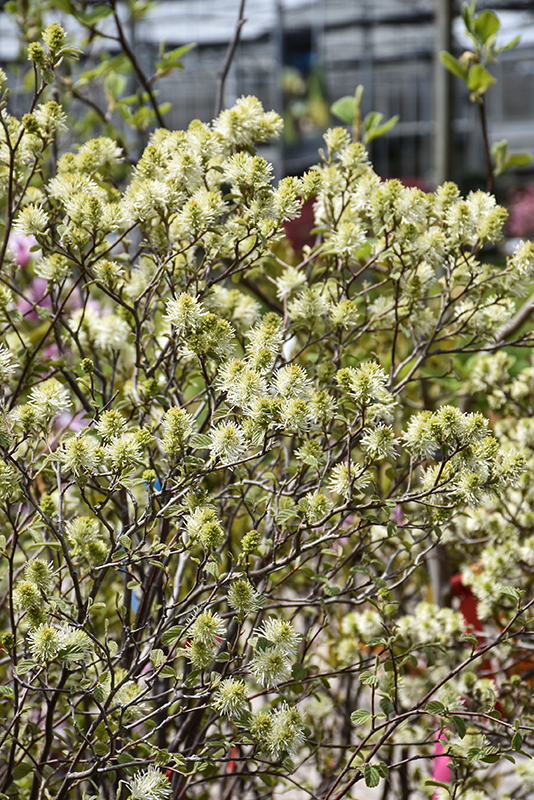
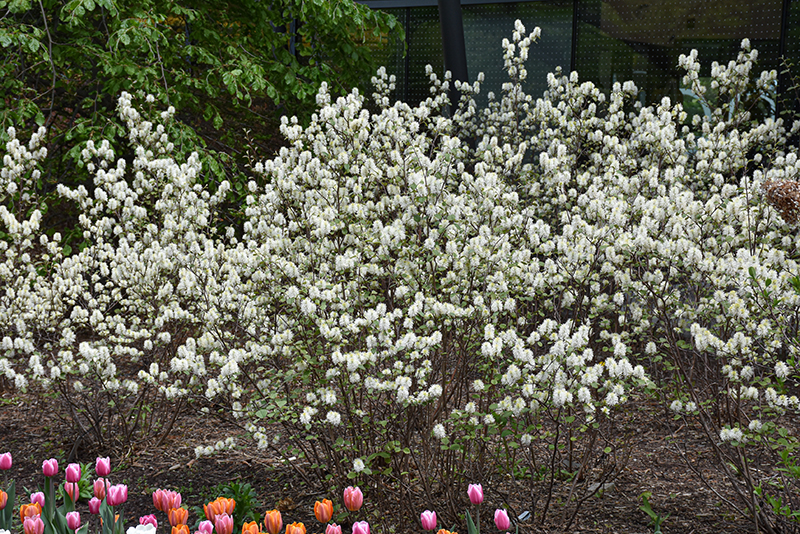
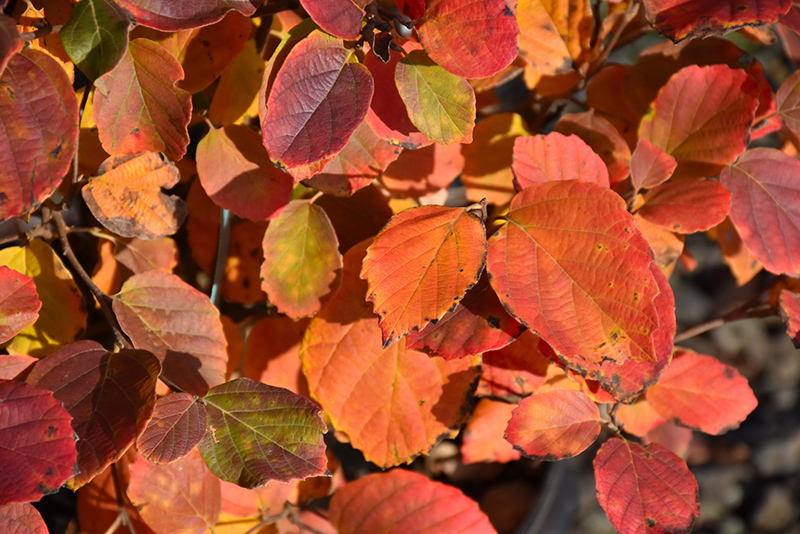
Hardiness Zone: 5a Other Names: Witch Alder, Large Fothergilla Description: A versatile and trouble-free landscape shrub; features showy white "bottle-brush" flowers in spring on bare branches, blue-green summer foliage, vivid fall colors and an upright mounded habit of growth, prefers light acidic soils; a choice garden plant Ornamental Features Fothergilla, Mount Airy features showy spikes of fragrant white flowers rising above the foliage in mid spring before the leaves. It has bluish-green deciduous foliage. The round leaves turn an outstanding scarlet in the fall. Landscape Attributes Fothergilla, Mount Airy is a dense multi-stemmed deciduous shrub with a more or less rounded form. Its average texture blends into the landscape, but can be balanced by one or two finer or coarser trees or shrubs for an effective composition. This shrub will require occasional maintenance and upkeep, and should only be pruned after flowering to avoid removing any of the current season's flowers. Gardeners should be aware of the following characteristic(s) that may warrant special consideration; Fothergilla, Mount Airy is recommended for the following landscape applications; Planting & Growing Fothergilla, Mount Airy will grow to be about 6 feet tall at maturity, with a spread of 5 feet. It tends to fill out right to the ground and therefore doesn't necessarily require facer plants in front, and is suitable for planting under power lines. It grows at a slow rate, and under ideal conditions can be expected to live for 40 years or more. This shrub does best in full sun to partial shade. It does best in average to evenly moist conditions, but will not tolerate standing water. This plant should be periodically fertilized throughout the active growing season with a specially-formulated acidic fertilizer. It is not particular as to soil type, but has a definite preference for acidic soils, and is subject to chlorosis (yellowing) of the foliage in alkaline soils. It is somewhat tolerant of urban pollution. This is a selection of a native North American species.