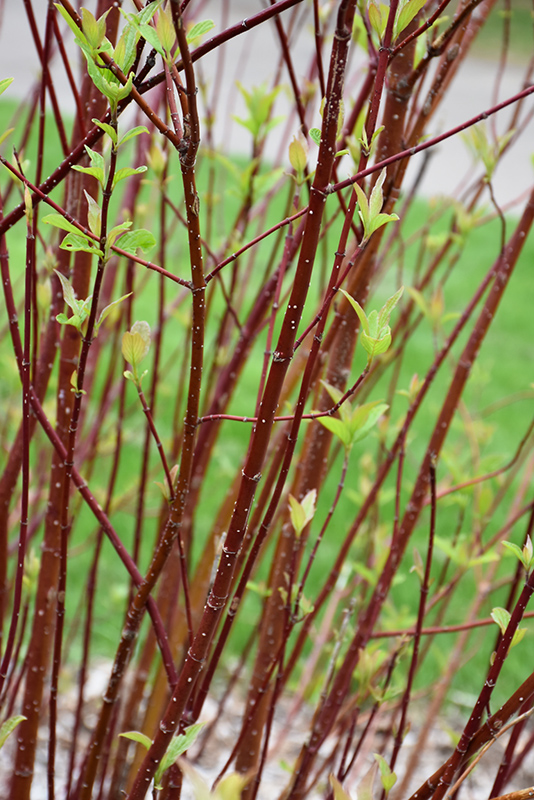
Dogwood, Arctic Fire Red Twig Cornus sericea 'Farrow' Height: 5 feet Spread: 5 feet
Sunlight:
Hardiness Zone: 3a Other Names: Red-Osier Brand: Proven Winners Description: A compact, dwarf form and very hardy shrub, ideal for general garden use in northern landscapes; intense red stems stand out against the winter snow, excellent for massing; some suckering Ornamental Features Dogwood, Arctic Fire Red Twig has clusters of creamy white flowers at the ends of the branches in late spring. It has dark green deciduous foliage. The pointy leaves turn an outstanding burgundy in the fall. It produces white berries in late summer. The scarlet branches are extremely showy and add significant winter interest. Landscape Attributes Dogwood, Arctic Fire Red Twig is a multi-stemmed deciduous shrub with an upright spreading habit of growth. Its average texture blends into the landscape, but can be balanced by one or two finer or coarser trees or shrubs for an effective composition. This shrub will require occasional maintenance and upkeep, and can be pruned at anytime. It is a good choice for attracting birds to your yard. Gardeners should be aware of the following characteristic(s) that may warrant special consideration; Dogwood, Arctic Fire Red Twig is recommended for the following landscape applications; Planting & Growing Dogwood, Arctic Fire Red Twig will grow to be about 5 feet tall at maturity, with a spread of 5 feet. It tends to fill out right to the ground and therefore doesn't necessarily require facer plants in front, and is suitable for planting under power lines. It grows at a fast rate, and under ideal conditions can be expected to live for approximately 20 years. This shrub does best in full sun to partial shade. It is quite adaptable, prefering to grow in average to wet conditions, and will even tolerate some standing water. This plant should be periodically fertilized throughout the active growing season with a specially-formulated acidic fertilizer. It is not particular as to soil type or pH. It is highly tolerant of urban pollution and will even thrive in inner city environments. This is a selection of a native North American species.