Arborvitae, Autumn Moon Thuja occidentalis 'Autumn Moon' Height: 3 feet Spread: 3 feet
Sunlight:
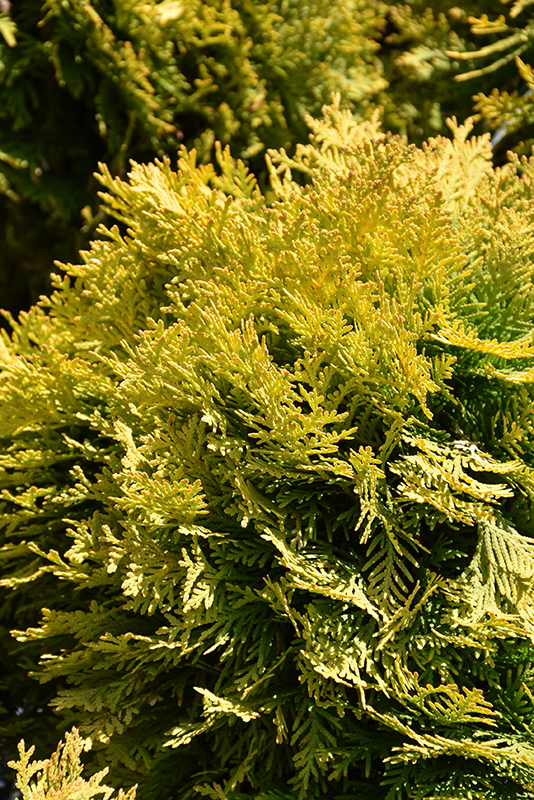
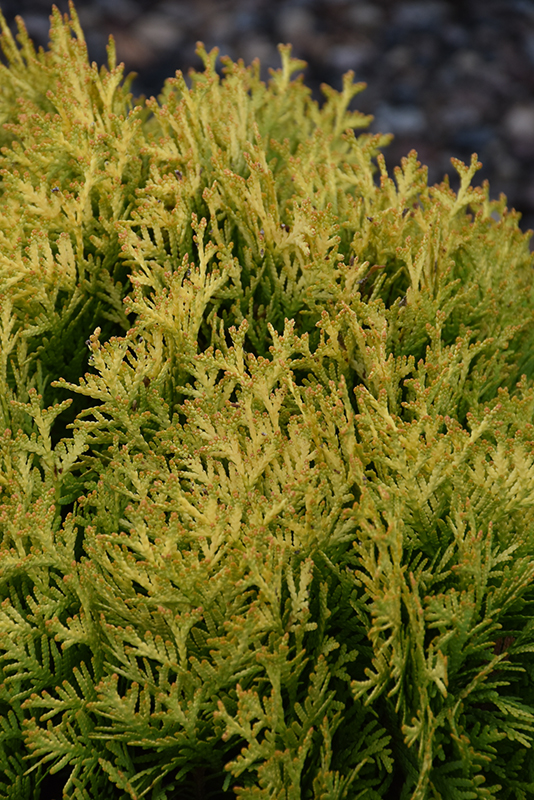
Hardiness Zone: 4a Other Names: Eastern White Cedar Brand: Iseli Nursery Description: A distinctive selection, featuring showy, canary yellow foliage in upright fans; forms a lasting, dense ball shape without pruning; excellent for color accent use in home gardens and landscapes; best with some sun, protect from drying winds Ornamental Features Arborvitae, Autumn Moon is a dwarf conifer which is primarily valued in the garden for its ornamental globe-shaped form. It has attractive lime green-variegated gold foliage which emerges yellow in spring. The scale-like sprays of foliage are highly ornamental and turn harvest gold in the fall, which persists throughout the winter. Landscape Attributes Arborvitae, Autumn Moon is a dense multi-stemmed evergreen shrub with a more or less rounded form. Its relatively fine texture sets it apart from other landscape plants with less refined foliage. This is a relatively low maintenance shrub. When pruning is necessary, it is recommended to only trim back the new growth of the current season, other than to remove any dieback. It has no significant negative characteristics. Arborvitae, Autumn Moon is recommended for the following landscape applications; Planting & Growing Arborvitae, Autumn Moon will grow to be about 3 feet tall at maturity, with a spread of 3 feet. It tends to fill out right to the ground and therefore doesn't necessarily require facer plants in front. It grows at a slow rate, and under ideal conditions can be expected to live for approximately 30 years. This shrub does best in full sun to partial shade. It prefers to grow in average to moist conditions, and shouldn't be allowed to dry out. This plant should be periodically fertilized throughout the active growing season with a specially-formulated acidic fertilizer. It is not particular as to soil type or pH. It is somewhat tolerant of urban pollution, and will benefit from being planted in a relatively sheltered location. Consider applying a thick mulch around the root zone in winter to protect it in exposed locations or colder microclimates. This is a selection of a native North American species. Special Attributes Arborvitae don't do well if they aren't well watered regularly. Evergreens need to be watered during the winter. Our desert climate especially in late winter to early spring evergreens can suffer during next growing season. An easy way to remember check for dryness on the holidays Halloween, Thanksgiving, New Year's Day, Valentines Day & Easter.