Hydrangea, Pop Star Hydrangea macrophylla 'BAILMACSIX' Height: 3 feet Spread: 3 feet
Sunlight:
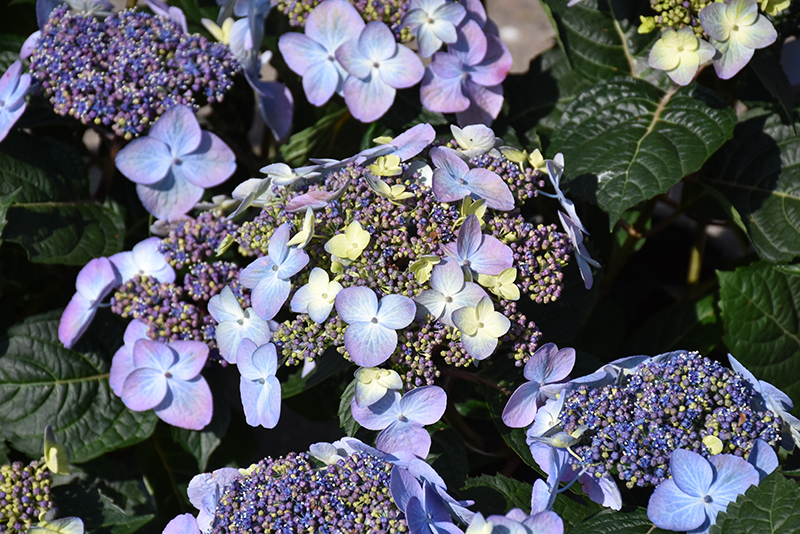
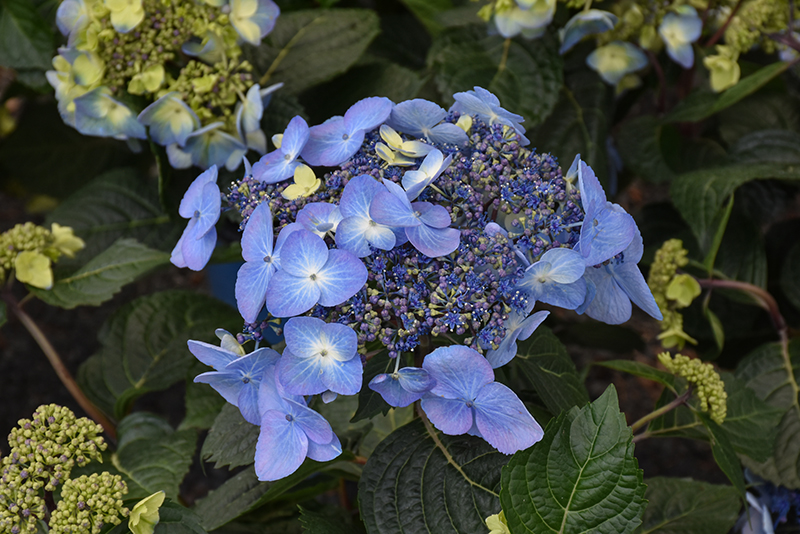
Hardiness Zone: 4a Other Names: Reblooming Bigleaf Hydrangea Group/Class: Endless Summer Collection Brand: Bailey Nurseries Description: A compact hydrangea that blooms on old and new wood, giving a long season of color; rounded lacecap flowers are electric blue in acidic soil, or shades of pink in neutral or alkaline soils; perfect for shrub shaded borders Ornamental Features Hydrangea, Pop Star features bold blue lacecap flowers with lavender overtones at the ends of the branches from early summer to mid fall. The flowers are excellent for cutting. It has green deciduous foliage. The serrated pointy leaves do not develop any appreciable fall color. Landscape Attributes Hydrangea, Pop Star is a multi-stemmed deciduous shrub with a mounded form. Its relatively coarse texture can be used to stand it apart from other landscape plants with finer foliage. This shrub will require occasional maintenance and upkeep, and should only be pruned after flowering to avoid removing any of the current season's flowers. It is a good choice for attracting bees and butterflies to your yard. It has no significant negative characteristics. Hydrangea, Pop Star is recommended for the following landscape applications; Planting & Growing Hydrangea, Pop Star will grow to be about 3 feet tall at maturity, with a spread of 3 feet. It tends to be a little leggy, with a typical clearance of 1 foot from the ground. It grows at a medium rate, and under ideal conditions can be expected to live for approximately 20 years. This shrub does best in partial shade to shade. It prefers to grow in average to moist conditions, and shouldn't be allowed to dry out. This plant should be periodically fertilized throughout the active growing season with a specially-formulated acidic fertilizer. It is not particular as to soil type or pH. It is highly tolerant of urban pollution and will even thrive in inner city environments, and will benefit from being planted in a relatively sheltered location. Consider applying a thick mulch around the root zone in both summer and winter to conserve soil moisture and protect it in exposed locations or colder microclimates. This is a selected variety of a species not originally from North America. Special Attributes Grows best in Eastern Washington and Oregon Desert climate, when shaded from 11 am to 7 pm during the summer months.