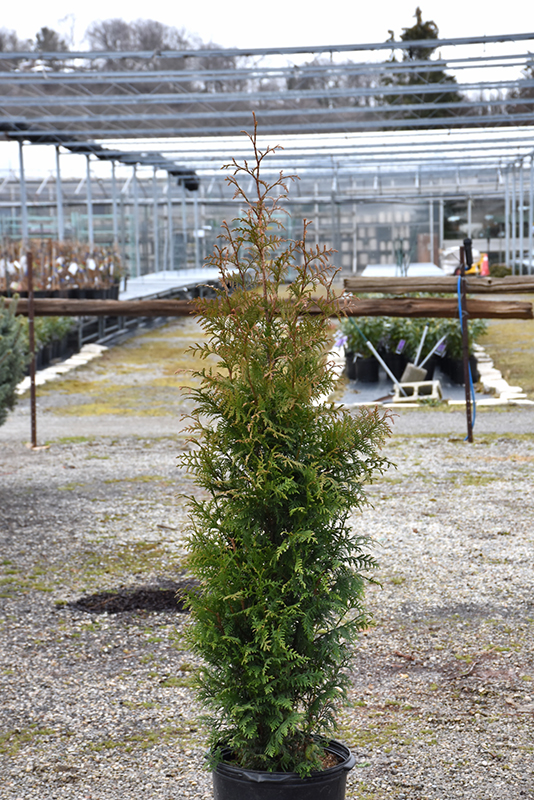
Western Red Cedar, Northern Spire Giant Thuja plicata 'Northern Spire' Height: 20 feet Spread: 6 feet
Sunlight:
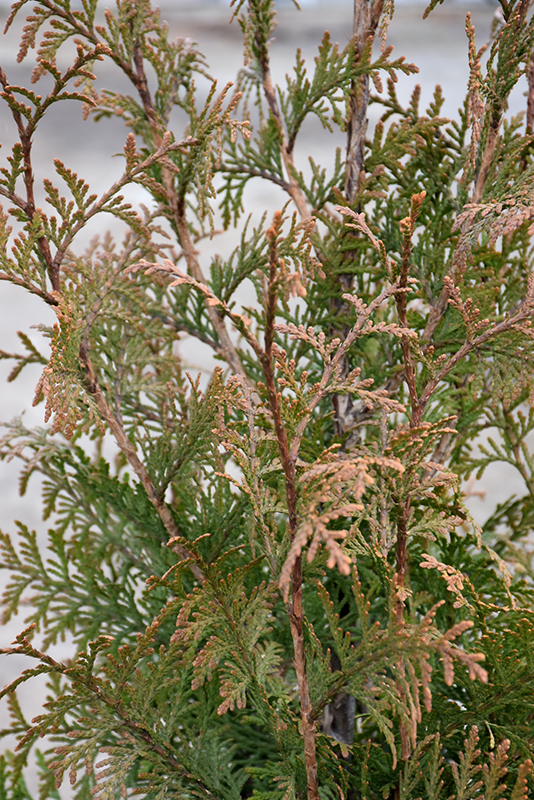
Hardiness Zone: 4a Other Names: Western Red Cedar, Western Arborvitae Description: A sturdy and beautiful evergreen with a dense, columnar habit; rich, dark green foliage turns russet red in fall; takes pruning exceptionally well; perfect as a trimmed hedge, vertical accent, or dense screen; adaptable to different soil conditions Ornamental Features Western Red Cedar, Northern Spire Giant is primarily valued in the landscape for its rigidly columnar form. It has attractive forest green evergreen foliage which emerges light green in spring. The fragrant scale-like sprays of foliage are highly ornamental and turn brick red in the fall, which persists throughout the winter. Landscape Attributes Western Red Cedar, Northern Spire Giant is a dense evergreen tree with a strong central leader and a narrowly upright and columnar growth habit. Its relatively fine texture sets it apart from other landscape plants with less refined foliage. This is a relatively low maintenance tree. When pruning is necessary, it is recommended to only trim back the new growth of the current season, other than to remove any dieback. Deer don't particularly care for this plant and will usually leave it alone in favor of tastier treats. It has no significant negative characteristics. Western Red Cedar, Northern Spire Giant is recommended for the following landscape applications; Planting & Growing Western Red Cedar, Northern Spire Giant will grow to be about 20 feet tall at maturity, with a spread of 6 feet. It has a low canopy, and is suitable for planting under power lines. It grows at a medium rate, and under ideal conditions can be expected to live for 50 years or more. This tree does best in full sun to partial shade. It prefers to grow in average to moist conditions, and shouldn't be allowed to dry out. This plant should be periodically fertilized throughout the active growing season with a specially-formulated acidic fertilizer. It is not particular as to soil type or pH. It is somewhat tolerant of urban pollution, and will benefit from being planted in a relatively sheltered location. This is a selection of a native North American species. Special Attributes Evergreens need to be watered during the winter. Our desert climate especially in late winter to early spring evergreens can suffer during next growing season. An easy way to remember check for dryness on the holidays Halloween, Thanksgiving, New Year's Day, Valentines Day & Easter.