Height: 4 feet Spread: 5 feet
Sunlight:
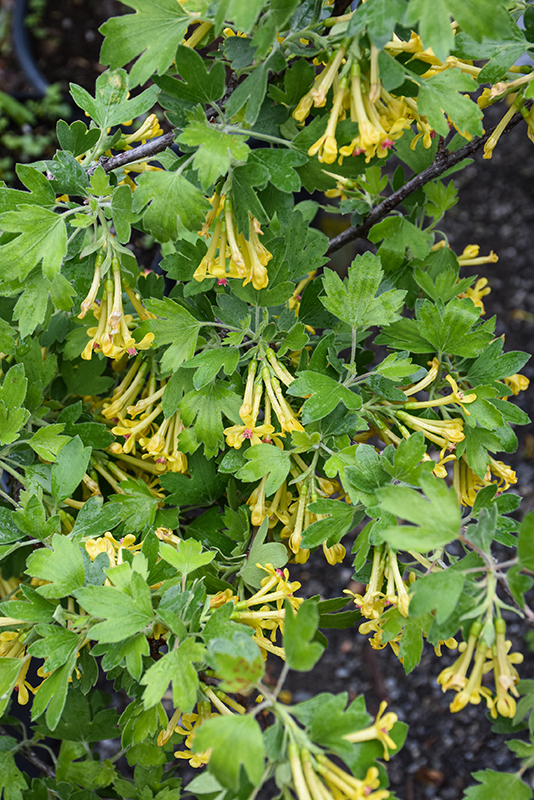
Hardiness Zone: 3a Other Names: Blackcurrant, Buffalo Currant, Missouri Currant Description: An upright shrub with arching branches, features fragrant clove-scented yellow flowers in spring followed by large, tasty berries, good fall color; fine for a medium-sized hedge or screen, tends to sucker and open up with age, can be susceptible to mildew Edible Qualities Currant, Crandall is a small shrub that is commonly grown for its edible qualities, although it does have ornamental merits as well. It produces large clusters of black round berries with a silvery blue blush which are typically harvested when mature. The berries have a tart taste with a juicy texture and a sweet fragrance. The berries are most often used in the following ways: Features & Attributes Currant, Crandall has racemes of fragrant yellow tubular flowers hanging below the branches from mid spring to early summer before the leaves. It has green deciduous foliage. The lobed leaves turn an outstanding crimson in the fall. It features an abundance of magnificent black berries with silvery blue blush from mid summer to mid fall. This is a multi-stemmed deciduous shrub with an upright spreading habit of growth. Its relatively fine texture sets it apart from other landscape plants with less refined foliage. This plant will require occasional maintenance and upkeep, and should only be pruned after flowering to avoid removing any of the current season's flowers. It is a good choice for attracting butterflies and hummingbirds to your yard. Gardeners should be aware of the following characteristic(s) that may warrant special consideration; Aside from its primary use as an edible, Currant, Crandall is sutiable for the following landscape applications; Planting & Growing Currant, Crandall will grow to be about 4 feet tall at maturity, with a spread of 5 feet. It has a low canopy. It grows at a medium rate, and under ideal conditions can be expected to live for approximately 30 years. This is a self-pollinating variety, so it doesn't require a second plant nearby to set fruit. This shrub is quite ornamental as well as edible, and is as much at home in a landscape or flower garden as it is in a designated edibles garden. It does best in full sun to partial shade. It is very adaptable to both dry and moist locations, and should do just fine under average home landscape conditions. It is considered to be drought-tolerant, and thus makes an ideal choice for xeriscaping or the moisture-conserving landscape. To help this plant achive its best flowering performance, periodically apply a flower-boosting fertilizer from early spring through into the active growing season. It is not particular as to soil pH, but grows best in rich soils. It is highly tolerant of urban pollution and will even thrive in inner city environments. This is a selection of a native North American species, and it is considered by many to be an heirloom variety.