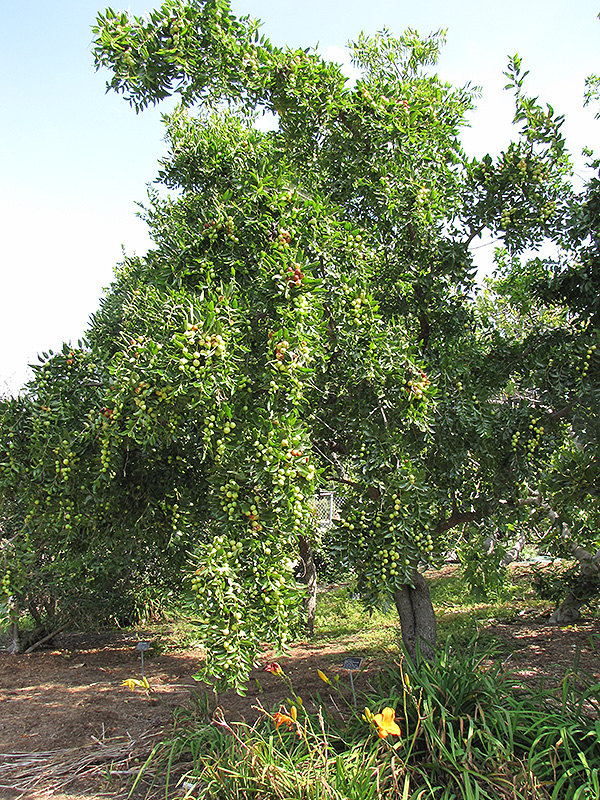
Height: 15 feet Spread: 15 feet
Sunlight:
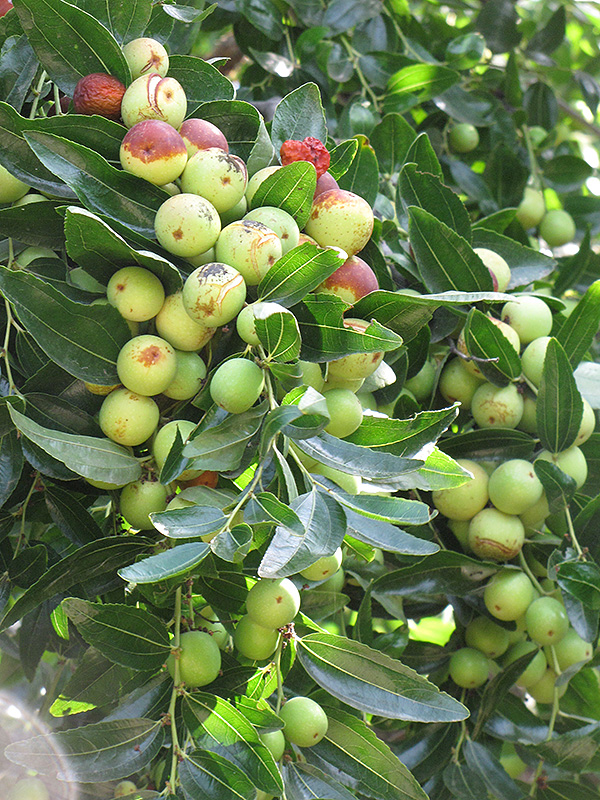
Hardiness Zone: 5b Other Names: Jujuba, Red Date, Chinese Date, Korean Date Description: This selection produces larger, oblong fruit that is crisp and sweet when golden-brown, becoming chewy and very sweet when ripe; densely branched and shrub-like, with shiny green leaves; suckers aggressively, avoid locating near flowerbeds; very spiny Ornamental Features Jujube, Li is primarily grown for its highly ornamental fruit. The fruits are showy dark brown drupes with brick red overtones, which are carried in abundance from late summer to mid fall. The fruit can be messy if allowed to drop on the lawn or walkways, and may require occasional clean-up. It features subtle fragrant white flowers with chartreuse overtones at the ends of the branches from mid spring to early summer. It has dark green foliage with light green veins. The serrated oval leaves do not develop any appreciable fall color. This plant is primarily grown as an ornamental, but it's also valued for its edible qualities. The large oblong sweet fruit is most often used in the following ways: Landscape Attributes Jujube, Li is a multi-stemmed deciduous tree with a more or less rounded form. It lends an extremely fine and delicate texture to the landscape composition which can make it a great accent feature on this basis alone. This is a high maintenance tree that will require regular care and upkeep, and is best pruned in late winter once the threat of extreme cold has passed. It is a good choice for attracting birds to your yard. Gardeners should be aware of the following characteristic(s) that may warrant special consideration; Jujube, Li is recommended for the following landscape applications; Planting & Growing Jujube, Li will grow to be about 15 feet tall at maturity, with a spread of 15 feet. It has a low canopy with a typical clearance of 2 feet from the ground, and is suitable for planting under power lines. It grows at a medium rate, and under ideal conditions can be expected to live for 60 years or more. This is a self-pollinating variety, so it doesn't require a second plant nearby to set fruit. This tree does best in full sun to partial shade. It does best in average conditions that are neither too wet nor too dry. To help this plant achive its best flowering performance, periodically apply a flower-boosting fertilizer from early spring through into the active growing season. It is not particular as to soil type or pH. It is somewhat tolerant of urban pollution. This is a selected variety of a species not originally from North America.