Lewisia, Rainbow Mix Bitterroot Lewisia cotyledon 'Rainbow' Plant Height: 6 inches Flower Height: 10 inches Spacing: 8 inches
Sunlight:
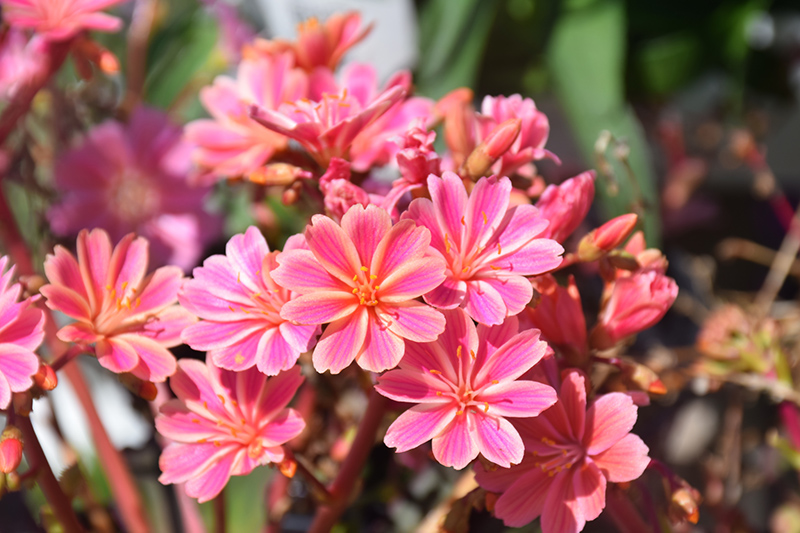
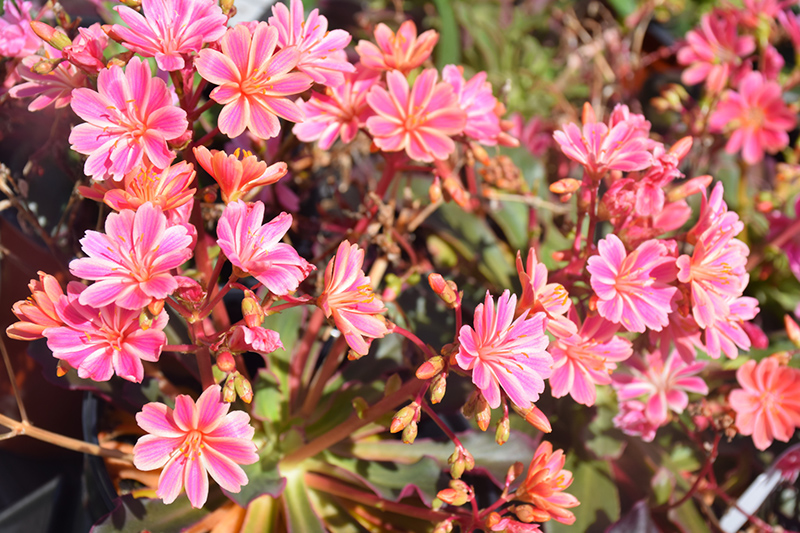
Hardiness Zone: 4a Other Names: Cliff Maids, Siskiyou Lewisia Description: Stunning primrose-like flowers in brilliant shades of purple, pink, yellow, white, and orange rise above the deep green, spoon shaped foliage; a succulent plant that is perfect for rock gardens or border front plantings Ornamental Features Lewisia, Rainbow Mix Bitterroot has hot pink star-shaped flowers with purple overtones and yellow streaks at the ends of the stems from late spring to mid summer, which are interesting on close inspection. Its attractive succulent oval leaves emerge light green in spring, turning dark green in color the rest of the year. Landscape Attributes Lewisia, Rainbow Mix Bitterroot is an herbaceous evergreen perennial with a mounded form. Its relatively fine texture sets it apart from other garden plants with less refined foliage. This is a high maintenance plant that will require regular care and upkeep, and should not require much pruning, except when necessary, such as to remove dieback. It has no significant negative characteristics. Lewisia, Rainbow Mix Bitterroot is recommended for the following landscape applications; Planting & Growing Lewisia, Rainbow Mix Bitterroot will grow to be only 6 inches tall at maturity extending to 10 inches tall with the flowers, with a spread of 12 inches. When grown in masses or used as a bedding plant, individual plants should be spaced approximately 8 inches apart. Its foliage tends to remain low and dense right to the ground. It grows at a slow rate, and under ideal conditions can be expected to live for approximately 5 years. As an evegreen perennial, this plant will typically keep its form and foliage year-round. This plant does best in full sun to partial shade. It prefers dry to average moisture levels with very well-drained soil, and will often die in standing water. To help this plant achive its best flowering performance, periodically apply a flower-boosting fertilizer from early spring through into the active growing season. It is not particular as to soil pH, but grows best in sandy soils. It is quite intolerant of urban pollution, therefore inner city or urban streetside plantings are best avoided, and will benefit from being planted in a relatively sheltered location. Consider applying a thick mulch around the root zone in both summer and winter to conserve soil moisture and protect it in exposed locations or colder microclimates. This is a selection of a native North American species.