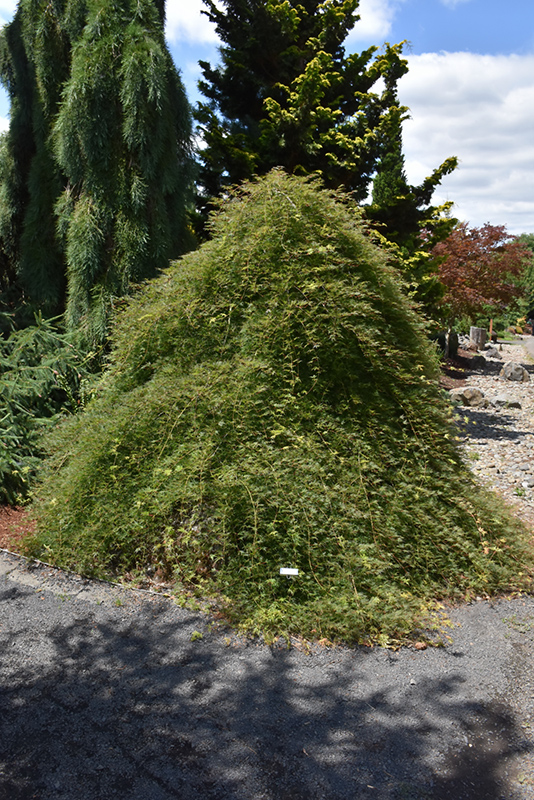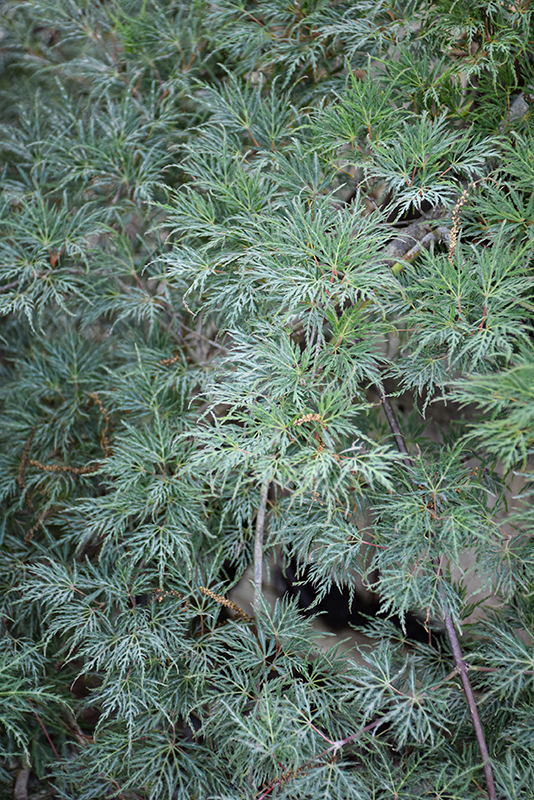
Japanese Maple, Emerald Lace Acer palmatum 'Emerald Lace' Height: 10 feet Spread: 10 feet
Sunlight:
Hardiness Zone: 5b Other Names: Laceleaf Japanese Maple, Threadleaf Japanese Maple Group/Class: Dissectum Description: A phenomenal small landscape tree with finely dissected, bright green leaves with red petioles; stunning burgundy-red fall color; fine texture and rich fall colors make this a stunning accent for small home landscapes Ornamental Features Japanese Maple, Emerald Lace is primarily valued in the landscape or garden for its ornamental globe-shaped form. It features subtle corymbs of red flowers rising above the foliage in mid spring before the leaves. It has attractive light green deciduous foliage. The deeply cut ferny palmate leaves are highly ornamental and turn outstanding shades of red and burgundy in the fall. The rough gray bark and red branches add an interesting dimension to the landscape. Landscape Attributes Japanese Maple, Emerald Lace is a deciduous tree with a more or less rounded form. It lends an extremely fine and delicate texture to the landscape composition which can make it a great accent feature on this basis alone. This is a relatively low maintenance tree, and should only be pruned in summer after the leaves have fully developed, as it may 'bleed' sap if pruned in late winter or early spring. It has no significant negative characteristics. Japanese Maple, Emerald Lace is recommended for the following landscape applications; Planting & Growing Japanese Maple, Emerald Lace will grow to be about 10 feet tall at maturity, with a spread of 10 feet. It has a low canopy with a typical clearance of 2 feet from the ground, and is suitable for planting under power lines. It grows at a slow rate, and under ideal conditions can be expected to live for 80 years or more. This tree does best in partial shade to shade. It prefers to grow in average to moist conditions, and shouldn't be allowed to dry out. This plant should be periodically fertilized throughout the active growing season with a specially-formulated acidic fertilizer. It is not particular as to soil pH, but grows best in rich soils. It is somewhat tolerant of urban pollution, and will benefit from being planted in a relatively sheltered location. Consider applying a thick mulch around the root zone in winter to protect it in exposed locations or colder microclimates. This is a selected variety of a species not originally from North America. Special Attributes Japanese maples generally produce a few to no seeds called samaras, which are commonly referred to as helicopters 1/2 to 3/4 of an inch long, and approximately 1/4 inch wide. Growing in pairs, they start green then mature red during the growing season