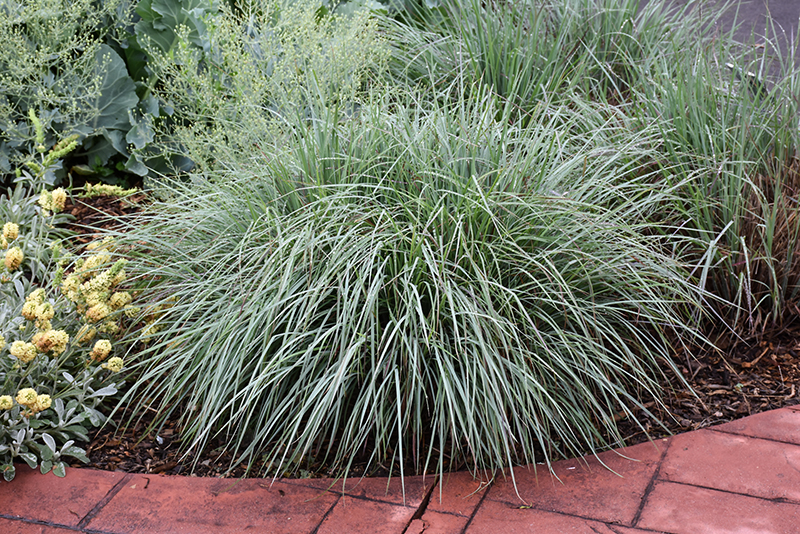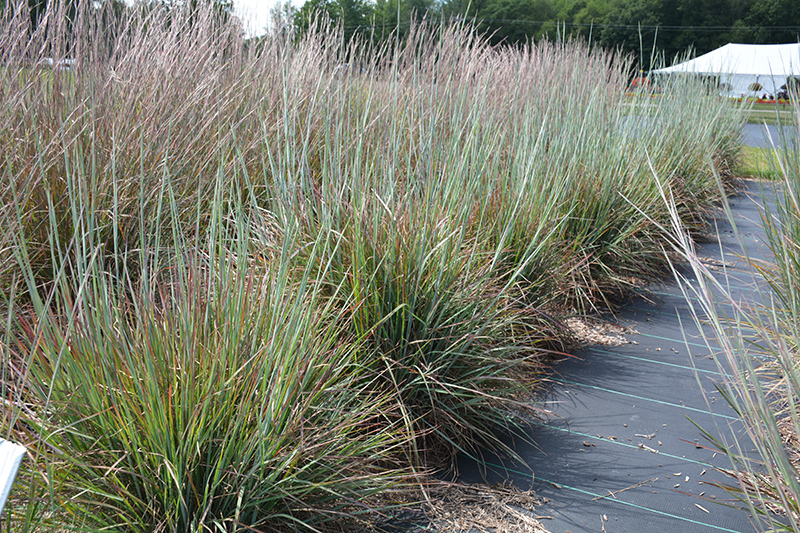
Little Bluestem Grass, Standing Ovation Schizachyrium scoparium 'Standing Ovation' Height: 4 feet Spread: 20 inches
Sunlight:
Hardiness Zone: 3a Other Names: Little Bluestem Description: An excellent variety for hot, dry areas with consistent green-blue, ribbon-like foliage that takes on hues of violet-purple in fall; silvery white seed heads persist well into winter; an outstanding accent plant Ornamental Features Little Bluestem Grass, Standing Ovation's attractive grassy leaves are dark green in color with showy silvery blue variegation and tinges of purple on a plant with an upright spreading habit of growth. As an added bonus, the foliage turns a gorgeous violet in the fall. It has masses of beautiful spikes of purple flowers rising above the foliage in late summer, which are most effective when planted in groupings. Landscape Attributes Little Bluestem Grass, Standing Ovation is an herbaceous perennial grass with an upright spreading habit of growth. It brings an extremely fine and delicate texture to the garden composition and should be used to full effect. This is a relatively low maintenance plant, and is best cut back to the ground in late winter before active growth resumes. It has no significant negative characteristics. Little Bluestem Grass, Standing Ovation is recommended for the following landscape applications; Planting & Growing Little Bluestem Grass, Standing Ovation will grow to be about 3 feet tall at maturity, with a spread of 20 inches. It grows at a medium rate, and under ideal conditions can be expected to live for approximately 10 years. As an herbaceous perennial, this plant will usually die back to the crown each winter, and will regrow from the base each spring. Be careful not to disturb the crown in late winter when it may not be readily seen! This plant does best in full sun to partial shade. It prefers to grow in average to moist conditions, and shouldn't be allowed to dry out. To help this plant achive its best flowering performance, periodically apply a flower-boosting fertilizer from early spring through into the active growing season. It is not particular as to soil type or pH. It is somewhat tolerant of urban pollution. This is a selection of a native North American species. It can be propagated by division; however, as a cultivated variety, be aware that it may be subject to certain restrictions or prohibitions on propagation.