Crabapple, Flowering Coralburst Malus 'Coralburst' Height: 15 feet Spread: 15 feet
Sunlight:
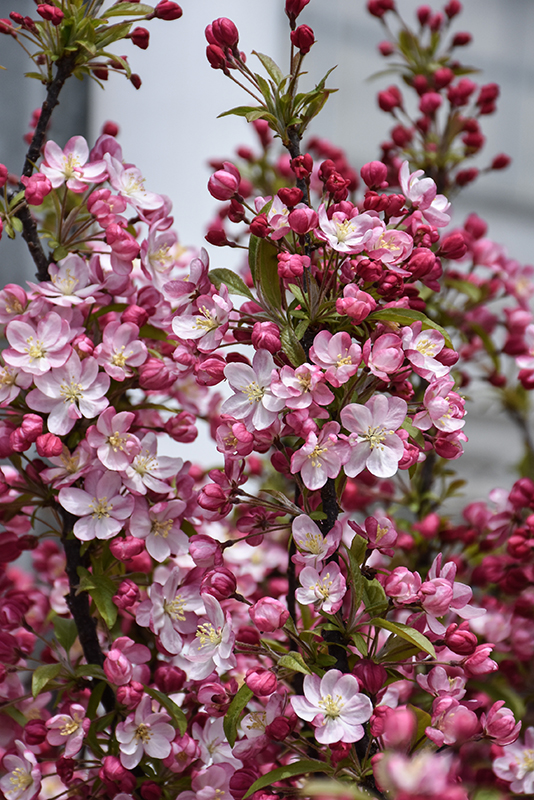
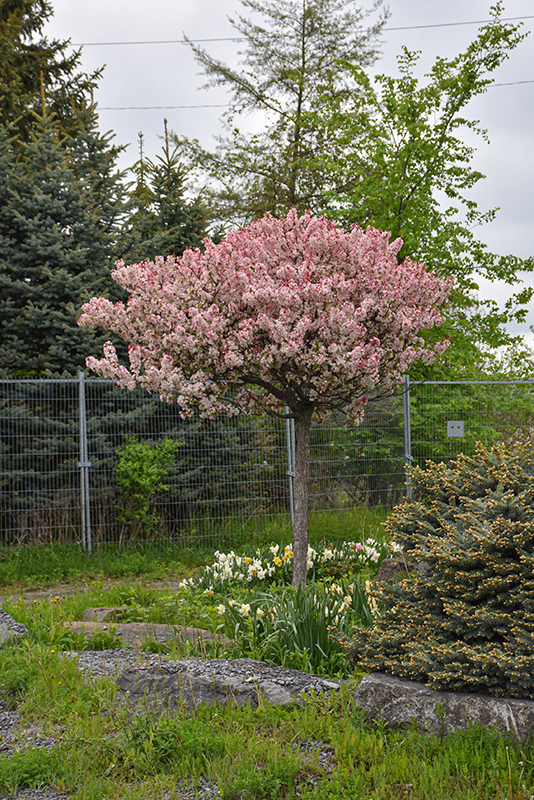
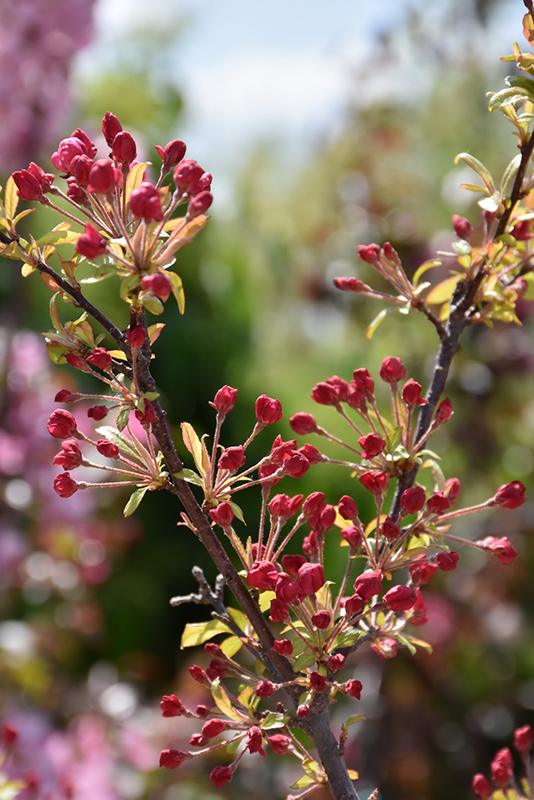
Hardiness Zone: 3b Other Names: Roseybloom, Crabapple Description: One of the finest flowering crab selections, this is a dwarf variety featuring a froth of double coral-pink flowers in spring and reddish-orange fruit in fall; needs well-drained soil and full sun, the perect focal point in a mixed garden composition Ornamental Features Crabapple, Flowering Coralburst is clothed in stunning clusters of fragrant semi-double rose flowers along the branches in mid spring, which emerge from distinctive coral-pink flower buds before the leaves. The fruits are showy tomato-orange pomes carried in abundance from early fall to late winter. It has dark green deciduous foliage. The pointy leaves turn yellow in fall. Landscape Attributes Crabapple, Flowering Coralburst is a multi-stemmed deciduous tree with a more or less rounded form. Its average texture blends into the landscape, but can be balanced by one or two finer or coarser trees or shrubs for an effective composition. This tree will require occasional maintenance and upkeep, and is best pruned in late winter once the threat of extreme cold has passed. It is a good choice for attracting birds to your yard. It has no significant negative characteristics. Crabapple, Flowering Coralburst is recommended for the following landscape applications; Planting & Growing Crabapple, Flowering Coralburst will grow to be about 15 feet tall at maturity, with a spread of 15 feet. It has a low canopy with a typical clearance of 3 feet from the ground, and is suitable for planting under power lines. It grows at a medium rate, and under ideal conditions can be expected to live for 50 years or more. This tree does best in full sun to partial shade. It prefers to grow in average to moist conditions, and shouldn't be allowed to dry out. This plant should be periodically fertilized throughout the active growing season with a specially-formulated acidic fertilizer. It is not particular as to soil type or pH. It is highly tolerant of urban pollution and will even thrive in inner city environments. This particular variety is an interspecific hybrid.