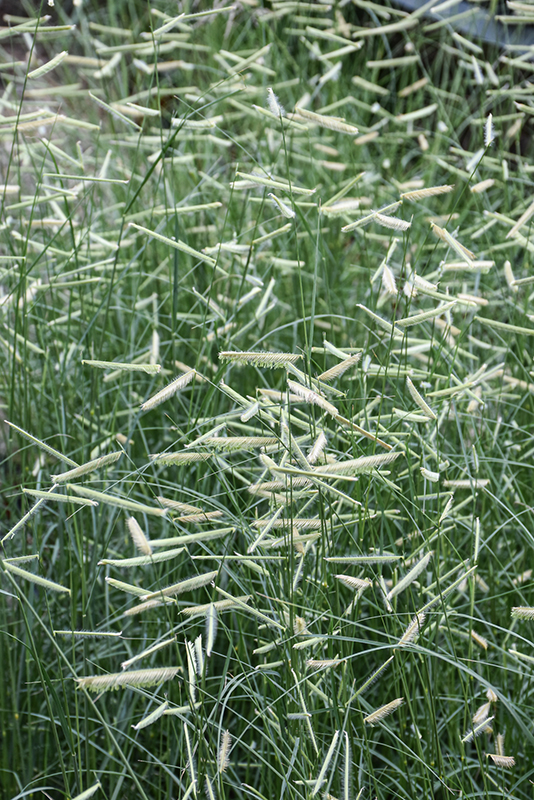
Blue Grama Grass, Blonde Ambition Bouteloua gracilis 'Blonde Ambition' Height: 3 feet Spread: 3 feet
Sunlight:
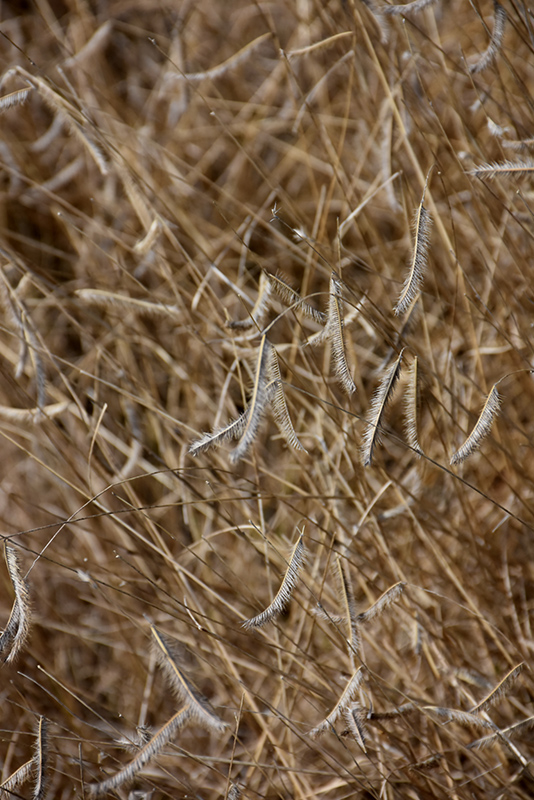
Hardiness Zone: 3b Other Names: Mosquito Grass Description: This cultivar is noted for its distinctive arrangement of horizontal, eyelash-like chartreuse flowers that give way to blond seed heads that persist through winter; blue-green foliage turns hues of gold in fall; use as a border accent or groundcover Ornamental Features Blue Grama Grass, Blonde Ambition features airy spikes of chartreuse flowers rising above the foliage from early to mid summer. Its attractive grassy leaves are bluish-green in color. As an added bonus, the foliage turns a gorgeous gold in the fall. Landscape Attributes Blue Grama Grass, Blonde Ambition is an herbaceous perennial grass with tall flower stalks held atop a low mound of foliage. It brings an extremely fine and delicate texture to the garden composition and should be used to full effect. This is a relatively low maintenance plant, and is best cleaned up in early spring before it resumes active growth for the season. It is a good choice for attracting birds to your yard. It has no significant negative characteristics. Blue Grama Grass, Blonde Ambition is recommended for the following landscape applications; Planting & Growing Blue Grama Grass, Blonde Ambition will grow to be about 30 inches tall at maturity, with a spread of 3 feet. It grows at a fast rate, and under ideal conditions can be expected to live for approximately 5 years. As an herbaceous perennial, this plant will usually die back to the crown each winter, and will regrow from the base each spring. Be careful not to disturb the crown in late winter when it may not be readily seen! This plant does best in full sun to partial shade. It prefers to grow in average to moist conditions, and shouldn't be allowed to dry out. To help this plant achive its best flowering performance, periodically apply a flower-boosting fertilizer from early spring through into the active growing season. It is not particular as to soil pH, but grows best in poor soils. It is highly tolerant of urban pollution and will even thrive in inner city environments. This is a selection of a native North American species.