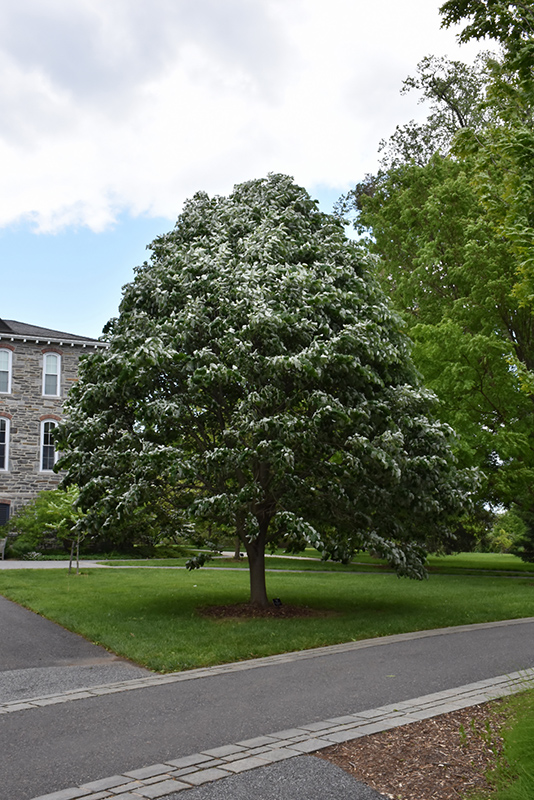
Linden, Sterling Silver Tilia tomentosa 'Sterling' Height: 45 feet Spread: 35 feet
Sunlight:
Hardiness Zone: 5a Description: A very ornamental shade tree with a broad, oval habit of growth and fragrant flowers in early summer; dark green leaves have a silvery backside which shimmers in the wind, very attractive; a neat and tidy tree, very adaptable, best for larger landscapes Ornamental Features Linden, Sterling Silver is primarily valued in the landscape for its distinctively pyramidal habit of growth. It features subtle clusters of fragrant yellow flowers with tan bracts hanging below the branches in early summer. It has attractive dark green foliage with silver undersides. The fuzzy heart-shaped leaves are highly ornamental and turn an outstanding gold in the fall. However, the fruit can be messy in the landscape and may require occasional clean-up. Landscape Attributes Linden, Sterling Silver is a dense deciduous tree with a strong central leader and a distinctive and refined pyramidal form. Its average texture blends into the landscape, but can be balanced by one or two finer or coarser trees or shrubs for an effective composition. This is a relatively low maintenance tree, and is best pruned in late winter once the threat of extreme cold has passed. It is a good choice for attracting birds and bees to your yard. It has no significant negative characteristics. Linden, Sterling Silver is recommended for the following landscape applications; Planting & Growing Linden, Sterling Silver will grow to be about 45 feet tall at maturity, with a spread of 35 feet. It has a high canopy of foliage that sits well above the ground, and should not be planted underneath power lines. As it matures, the lower branches of this tree can be strategically removed to create a high enough canopy to support unobstructed human traffic underneath. It grows at a medium rate, and under ideal conditions can be expected to live for 70 years or more. This tree should only be grown in full sunlight. It prefers to grow in average to moist conditions, and shouldn't be allowed to dry out. This plant should be periodically fertilized throughout the active growing season with a specially-formulated acidic fertilizer. It is not particular as to soil type or pH. It is somewhat tolerant of urban pollution. This is a selected variety of a species not originally from North America.